







Unfinished Vision: Nasheed’s Parliamentary Dream Reignites Political Tensions in Maldives
Malé, Maldives — As political maneuvering intensifies in the Maldives, one vision continues to cast a long shadow over the nation’s governance debate: President Mohamed Nasheed’s long-standing dream to transition the Maldives into a full parliamentary system. Though never fully realized during his presidency, this vision remains central to his political identity — and continues to divide opinion within the country’s top leadership.
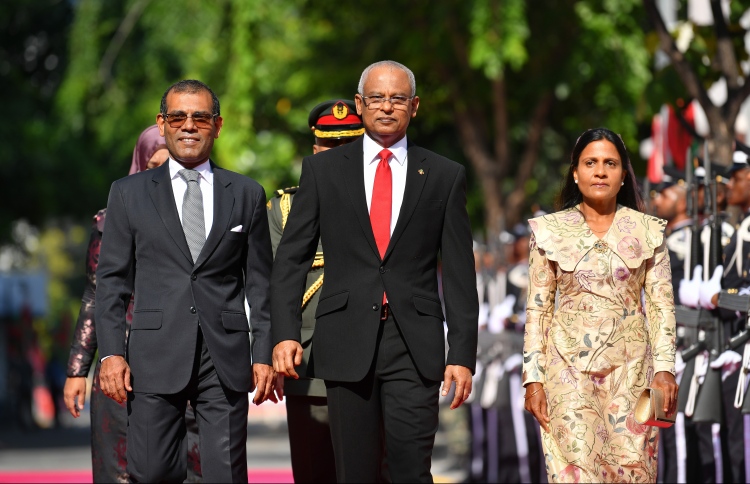
The ideological clash between President Ibrahim Mohamed Solih and Nasheed— once close allies under the banner of the Maldivian Democratic Party (MDP) — came to a head in recent years over this very issue. While Solih remained committed to the existing presidential system, Nasheed publicly pushed for a parliamentary model where executive power lies with the parliament and prime minister, not the president.
This internal divide led to a political rupture, and Nasheed eventually distanced himself from the MDP, even harshly criticizing the party he helped build. The tension not only weakened the party’s cohesion but also cast doubt over the future of reform-oriented politics in the Maldives.
Now, as reports emerge of Nasheed’s potential re-engagement with the MDP, many question whether this move signals a renewed effort to fulfill his unfinished goal of constitutional reform — or whether it’s a pragmatic political strategy amid shifting alliances. Critics argue that rejoining the very party he once mocked raises questions of consistency and motivation. Supporters, however, say it may be the only path to revive his vision and bring meaningful structural change to Maldivian democracy.
“Nasheed’s fight for a parliamentary system was never about personal gain — it was about accountability and governance,” said a former MDP member of parliament. “But any return to the MDP must be transparent in intent, not merely political theatre.”
The broader public remains divided. Some still believe in the merits of a parliamentary system — pointing to political instability and power centralization as reasons to reform. Others feel the debate distracts from more pressing national concerns such as economic resilience, judicial independence, and youth unemployment.
As the Maldives approaches future elections and a potentially defining era of constitutional debate, Nasheed’s dream remains alive — but controversial. Whether it becomes a national reality or remains a political ideal will depend not only on alliances but also on the political maturity of the nation.