










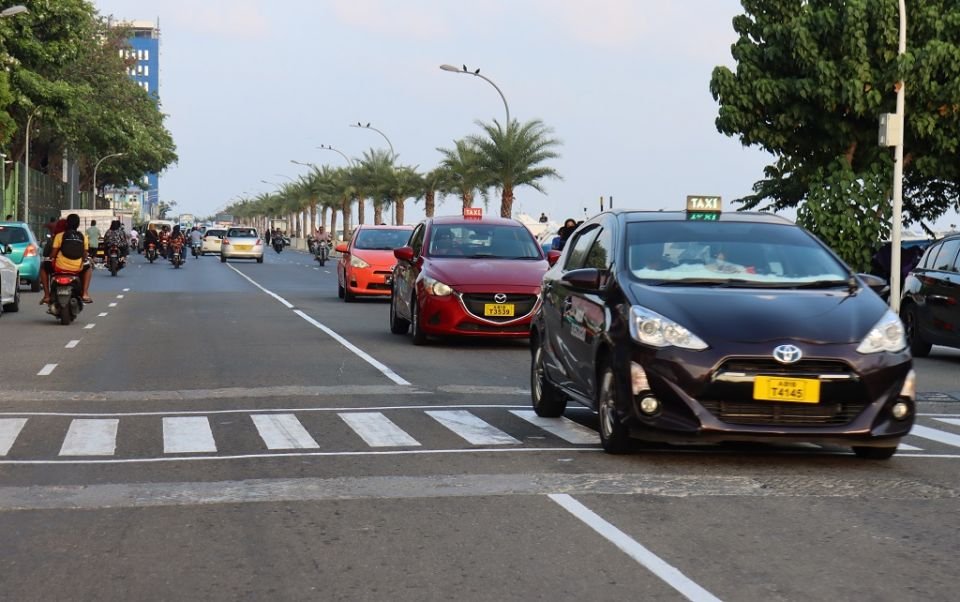
MTCC’s New Taxi Service Hits Hard: A Heavy Blow to Private Drivers in Malé
In what is being called a disruptive shift in the Maldivian transport landscape, the Maldives Transport and Contracting Company (MTCC) has launched its own taxi service in the capital city, Malé. While the initiative is being promoted as a step toward improving public transport accessibility and efficiency, it has sparked fierce backlash from private taxi drivers who now fear for their livelihoods.
For hundreds of drivers who rely on their daily fares to survive in the congested capital, the state-owned giant’s entry into the taxi market is not just competition—it’s an existential threat.
A Lifeline Under Attack
For years, private taxi drivers in Malé have formed the backbone of local ground transport, braving traffic, heat, and long hours to serve residents and visitors alike. With limited job opportunities in the capital, many turned to taxi driving as a dependable way to support their families.
But the entry of MTCC into the taxi business has upended this fragile balance. Equipped with a fleet of brand-new vehicles, digital booking systems, and state support, the company has an undeniable advantage over individual drivers struggling to maintain aging vehicles and operate without institutional backing.
“It’s like we’re being pushed off the streets,” says Hassan, a private taxi driver who has been working in Malé for over 12 years. “We don’t have the resources MTCC has. How are we supposed to compete?”
State Power vs. Street Hustle
The concern voiced by drivers is not just about competition—it’s about fairness. Critics argue that the government, instead of supporting and regulating the existing private sector, is now crowding it out with publicly funded operations.
The MTCC taxi service comes with government support, guaranteed subsidies, and access to prime infrastructure, while independent drivers face rising fuel prices, higher maintenance costs, and limited access to financing. In essence, the playing field is anything but level.
This move has also raised serious economic and ethical questions: should a state-backed entity with near-unlimited resources be allowed to compete directly with individuals whose livelihoods depend on the very same market?
A Blow to the Informal Economy
Malé’s informal economy is deeply reliant on micro-entrepreneurs—drivers, delivery riders, street vendors—many of whom work without formal contracts or business licenses but contribute meaningfully to urban life and economic flow. By sidelining private taxi drivers, the MTCC initiative risks hollowing out one of the few income sources available to ordinary Maldivians in a saturated job market.
This could have long-term social consequences. Already, some drivers have reported a drop in daily fares and income. “Before, I made enough to feed my family. Now, I go home with less than MVR 200 some days,” says Ali, another driver who’s now considering leaving the profession altogether.
Modernization or Monopoly?
The government has defended the initiative as part of its broader effort to modernize transport, reduce ride costs, and improve service quality through regulated and standardized systems. But critics argue that the same modernization could have been achieved by empowering existing private taxi operators with digital tools, incentives, and training—without bulldozing them out of the market.
“There’s nothing wrong with upgrading transport,” says one local economist. “But the government should be creating opportunities, not wiping them out. They had a chance to formalize and elevate private drivers, but instead they introduced a state monopoly.”
A Call for Balance
What’s needed now, say stakeholders, is a balanced policy that allows both the MTCC and private taxi operators to coexist. That could mean designating separate service zones, providing subsidies or financing programs for private drivers to upgrade their vehicles, or creating an integrated ride-hailing platform that includes both public and private options.
Taxi drivers in Malé are calling for dialogue with the government, hoping that decision-makers will recognize the human cost of the policy. For many of them, this isn’t about business—it’s about survival.
As the MTCC continues to expand its services, the government faces a choice: pursue state-driven development at any cost, or listen to the voices of everyday citizens whose jobs and dignity are on the line. The outcome could reshape the future of work and fairness in the Maldives.