






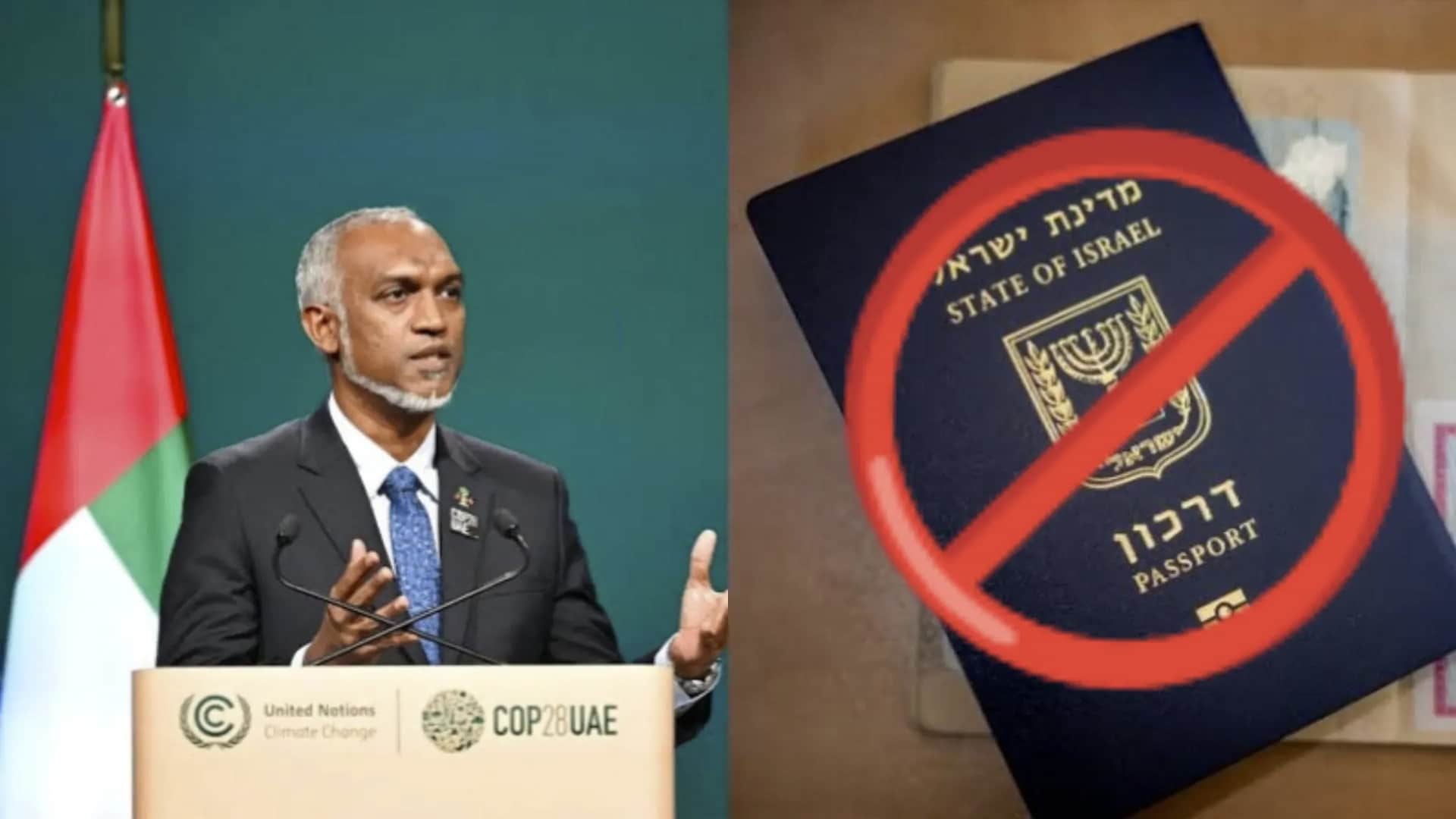
Maldives Leads Global Stand: Bans Israeli Passports and Products in Solidarity with Palestine
In a bold move against Israeli aggression in Gaza, the Maldives imposes sweeping bans on Israeli travel and products tied to state-sponsored violence.
Malé, Maldives —
The Maldives has declared itself a global champion of the Palestinian cause, enacting a full ban on Israeli passport holders entering the country and prohibiting the sale of goods and services linked to Israeli state funding. The decision, hailed by many in the Muslim world, follows global outrage over continued Israeli military actions in Gaza, which have been widely condemned as inhumane and disproportionate.
Government Takes Decisive Humanitarian Stance
The government, led by President Dr. Mohamed Muizzu, issued an official decree this week, citing “grave human rights violations and mass killings of civilians in Gaza” as the driving force behind the policy. State Minister of Foreign Affairs called the move “a moral obligation and a peaceful protest against genocide.”
“The Maldives cannot remain silent while innocent lives — especially children — are lost in systematic bombings and violence. Our decision is a reflection of our national conscience and Islamic values,” he said in a press briefing.
Travel Ban on Israeli Passport Holders
Effective immediately, Israeli passport holders are barred from entering the Maldives, including tourists, business travelers, and diplomatic envoys. The Immigration Department confirmed that the directive applies to all points of entry, with strict enforcement in place.
Though the Maldives has historically maintained no formal diplomatic ties with Israel, this marks the first time such a comprehensive travel ban has been enacted in protest of its policies.
Boycott of Israeli-Affiliated Products and Brands
In addition to the travel restrictions, the government has banned the import, distribution, and sale of products from companies identified as directly supporting or funding the Israeli military or government institutions. This includes several major global brands, some of which operate fast food franchises and consumer goods outlets in the country.
The Ministry of Economic Development has published a preliminary blacklist of companies, with plans to expand as investigations into supply chain links continue.
“The aim is not economic isolation, but moral alignment,” said Minister of Trade and Industries. “We are sending a clear message — the Maldives will not be complicit in funding war crimes.”
Public Support and Regional Impact
Public response has been overwhelmingly supportive. Pro-Palestine rallies have filled the streets of Malé, with citizens calling for even broader international action. Civil society groups have also joined calls for other Muslim-majority nations to follow suit.
“The Maldives is showing the world that a small country can take a mighty stand,” said Mariyam Faiza, a university lecturer and activist. “This is not just about politics — it’s about humanity.”
Criticism and International Reactions
While praised in much of the Islamic world, the ban has drawn criticism from Western governments and trade partners concerned about escalating regional tensions and the economic consequences of targeting global brands. Human rights organizations have called for balanced approaches that do not fuel hate or discrimination.
However, Maldivian officials insist their policy is targeted against state-sponsored violence — not people or religion. “This is not about Judaism. This is about justice,” said a Foreign Ministry spokesperson.
Editor’s Note:
As international pressure mounts over the humanitarian catastrophe in Gaza, the Maldives’ bold and unapologetic stance places it at the forefront of global solidarity efforts. Whether others will follow remains to be seen — but the message from Malé is clear: silence is not an option.