







Powerful Forces Tried to Wipe Out Adhaalath”: Iyaz Abdul Latheef Defends Maldives’ Islamic Party
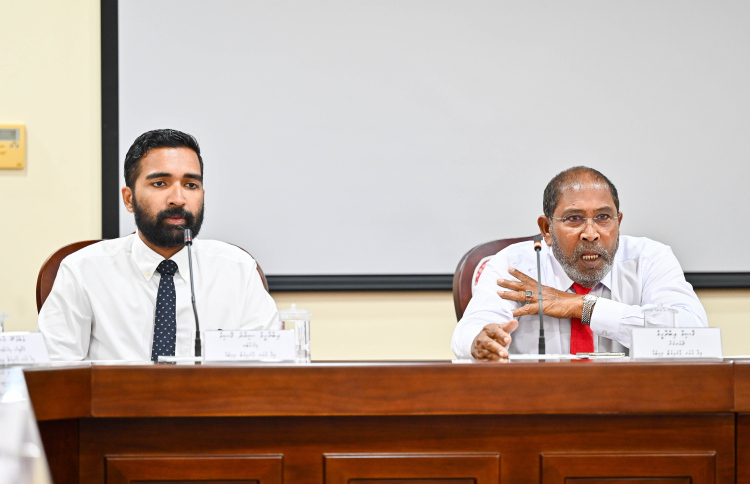
Malé, Maldives – Iyaz Abdul Latheef, a prominent figure in the Maldivian political and religious landscape, made strong remarks on Friday asserting that the Adhaalath Party—one of the Maldives’ key Islamic political movements—has faced systematic efforts by “powerful” forces to dismantle it over the past two decades. However, he emphasized, the party’s resilience stems from its commitment to truth and its foundational Islamic values.
“The Adhaalath Party has been destroyed by the powerful, but they have not succeeded, because this party speaks the truth,” said Iyaz.
Founded in 2005, the Adhaalath Party (often stylized as Adalat), emerged as a significant religious-political voice in Maldivian politics, advocating for the promotion of Islamic principles in governance and society. Over the years, it has played both oppositional and coalition roles, aligning with larger parties at various points to influence policy and national direction.
An Islamic Political Force
The Adhaalath Party was born out of the desire to preserve Islamic values amidst the rapidly changing socio-political environment in the Maldives. Its supporters view it as a necessary religious counterbalance to secular political forces, especially in areas like education, law, and foreign policy.
Despite its relatively small electoral base compared to larger players like the Maldivian Democratic Party (MDP) or the Progressive Party of Maldives (PPM), the Adhaalath Party has often been influential beyond its size—particularly on issues of national identity, Shariah law, and religious discourse.
Periods of Power and Persecution
The party has had a complex history. It was part of the coalition that brought Mohamed Nasheed to power in 2008, but later broke ranks with the MDP. It also supported President Abdulla Yameen in 2013 before becoming one of his fiercest critics, particularly after the jailing of party leader Sheikh Imran Abdulla following a major anti-government protest in 2015.
Sheikh Imran, a vocal and charismatic figure, was sentenced to 12 years in prison on terrorism charges many international observers considered politically motivated. His imprisonment drew widespread criticism and was seen as part of a broader campaign to silence dissenting political voices—particularly those rooted in religion.
In 2018, the Adhaalath Party once again played a key role in opposition unity that helped defeat Yameen and bring President Ibrahim Mohamed Solih to power. Sheikh Imran was later appointed as Minister of Home Affairs, signaling the party’s return to a position of influence.
Decline or Reinvention?
However, in recent years, the Adhaalath Party’s visibility and influence have waned. It has struggled to maintain a distinct political identity amid shifting alliances and increasing polarization between the country’s dominant political factions.
Iyaz’s comments may reflect a broader sentiment within the party’s base that it is being sidelined or intentionally weakened by larger, more resourceful political entities. Accusations of marginalization and internal fractures have raised questions about whether the party can maintain its relevance moving forward.
Still, Iyaz remains optimistic. His assertion that “truth” will prevail indicates the party’s commitment to Islamic principles as the foundation of its political legitimacy.
What’s Next for Adhaalath?
As the Maldives prepares for future elections and continues to navigate challenges ranging from economic instability to climate change and foreign influence, the role of smaller ideological parties like Adhaalath will remain important. Whether it can rebuild its influence or risks becoming a marginal force may depend on its ability to reconnect with a younger, more diverse electorate while remaining true to its foundational principles.