




“Every Island Matters”: Islanders Call for Equality as Development Focus Shifts Under President Muizzu
Across the Maldives, residents of outer islands are raising concern as long-standing dreams of equal development and access to essential services appear to be fading under the new administration. At the heart of their frustration is a simple but powerful demand: clean water and proper sewerage systems for every inhabited island — a vision once championed by former President Ibrahim Mohamed Solih, but now facing uncertainty under President Dr. Mohamed Muizzu’s shifting development agenda.
A Promise Once Delivered
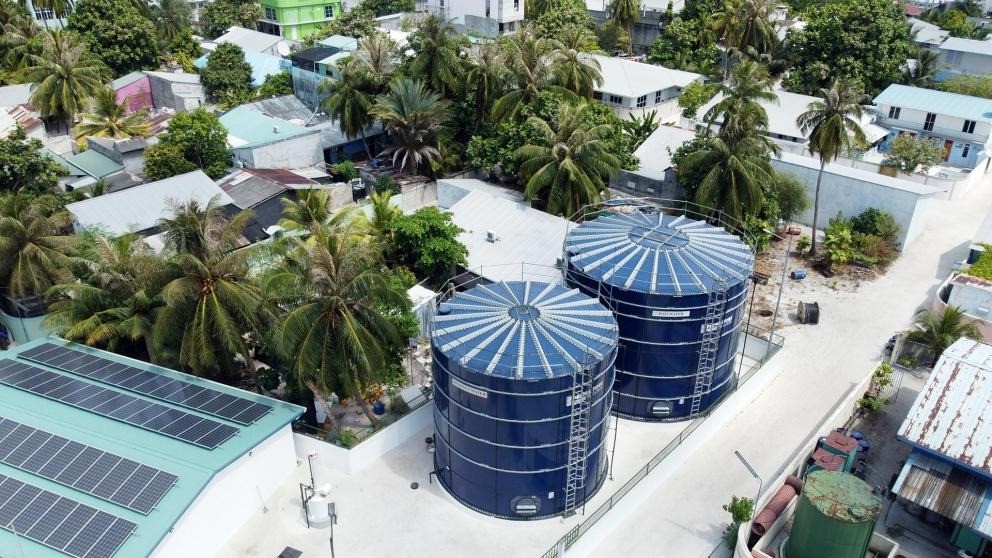
During his presidency, Ibrahim Mohamed Solih made a firm and emotional commitment to the people of the Maldives. Under his leadership, major investments were made to bring freshwater and sewerage systems to islands large and small, guided by the principle that “no island is too small for development.” His government oversaw dozens of infrastructure projects in the atolls, many of which had waited for decades for such basic needs.
For islanders, these projects were not just development statistics — they were lifelines. Access to clean water and hygienic sanitation is critical for health, dignity, and daily life. Solih’s efforts were widely praised for finally bridging the gap between Malé and the outer islands, bringing hope to communities that had long felt ignored by central governments.
Changing Course: A New Direction Under President Muizzu
However, under the current administration of President Muizzu, concerns are growing that this focus on equitable island development is being sidelined. Recent policy shifts suggest a preference for larger, more commercially strategic islands and urban development, potentially leaving many smaller communities behind.
Residents in outer atolls are reporting delays in ongoing projects, stalled infrastructure initiatives, and a lack of communication from authorities about promised developments. The fear is that the new government’s urban-centric development model may favor relocation and centralization over decentralization and inclusion — a move that many see as a betrayal of the Maldivian spirit of island life.
“We fought for years just to have running water and a sewer system,” said a community leader from Gaafu Dhaalu Atoll. “We finally saw change under Solih. Now we feel like we’re being forgotten again — just because we live on a small island.”
More Than Politics: It’s About Dignity and Rights
For islanders, this issue goes far beyond politics — it touches on their right to live with dignity on their ancestral lands. The suggestion that some islands are not “developable” or are too small to justify basic services is deeply offensive to many. It revives painful memories of historical neglect and fuels the belief that development in the Maldives is once again being politicized and concentrated in urban centers.
President Solih’s slogan — “Bodu vaa Kudhin vaa Farakaa Noon” (“Big or small, no difference”) — resonated precisely because it gave value to every citizen, regardless of where they lived. Islanders are now calling on the Muizzu administration to uphold that same principle, urging the government to recognize that every Maldivian has an equal right to access clean water and sanitation, no matter the size or economic output of their island.
A Divided Vision for the Nation?
At a time when climate change, coastal erosion, and environmental threats are already putting pressure on low-lying islands, the fear of being abandoned by national development policy adds emotional and psychological weight to residents’ concerns.
Rather than suggesting relocation or selectively investing in a few “hub islands,” many Maldivians believe the solution lies in strengthening all islands, making them livable, sustainable, and resilient.
“If the government starts deciding which islands deserve development, what’s next? Who decides which people matter?” asked a youth activist from Meemu Atoll.
The Call to Action
The people of the Maldives are not asking for luxury — they are demanding basic human necessities. Access to clean water and sanitation is not a political favor; it is a right. The legacy of President Solih in this regard stands as a benchmark — and a reminder that inclusive development is not only possible but essential.
Islanders across the nation are now calling on President Muizzu and his government to recommit to equal development, to continue and complete the water and sewerage projects, and to ensure that no island is left behind.
Because in a country of scattered islands and united hearts, true progress means lifting everyone — not just a chosen few.